Why Medication Doesn't Fix a Mechanical Problem
When your nasal passages are restricted, air takes the path of least resistance: through your mouth. Mouth breathing during sleep keeps your body in lighter sleep stages, increases the chance of snoring, dries out your throat and airway, and reduces the quality of oxygen your body draws in overnight. None of those outcomes change because you took a tablet.
Decongestants can reduce inflammation temporarily, but they don't physically open your nasal passages. Antihistamines sedate you, which changes how quickly you fall asleep but not how well you breathe once you're there. Melatonin regulates your sleep timing, but it does nothing for the tissue resistance that forces you into mouth breathing when you drift off.
That's the gap nasal breathing strips exist to fill.
What Nasal Breathing Strips for Sleeping Actually Do to Your Airway
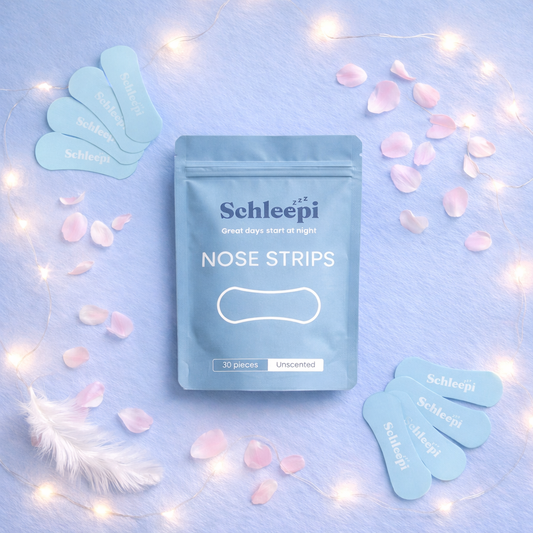
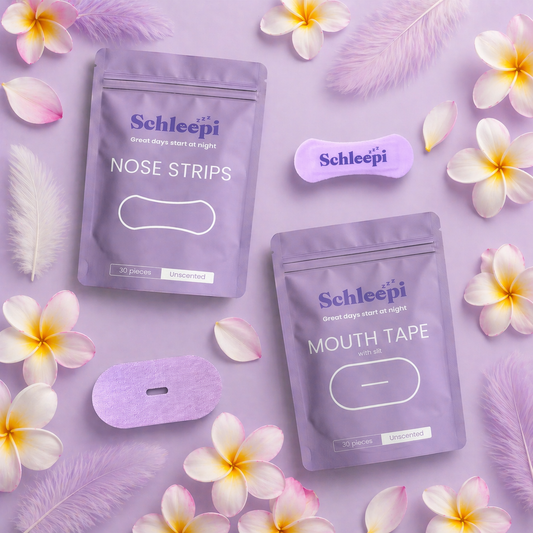
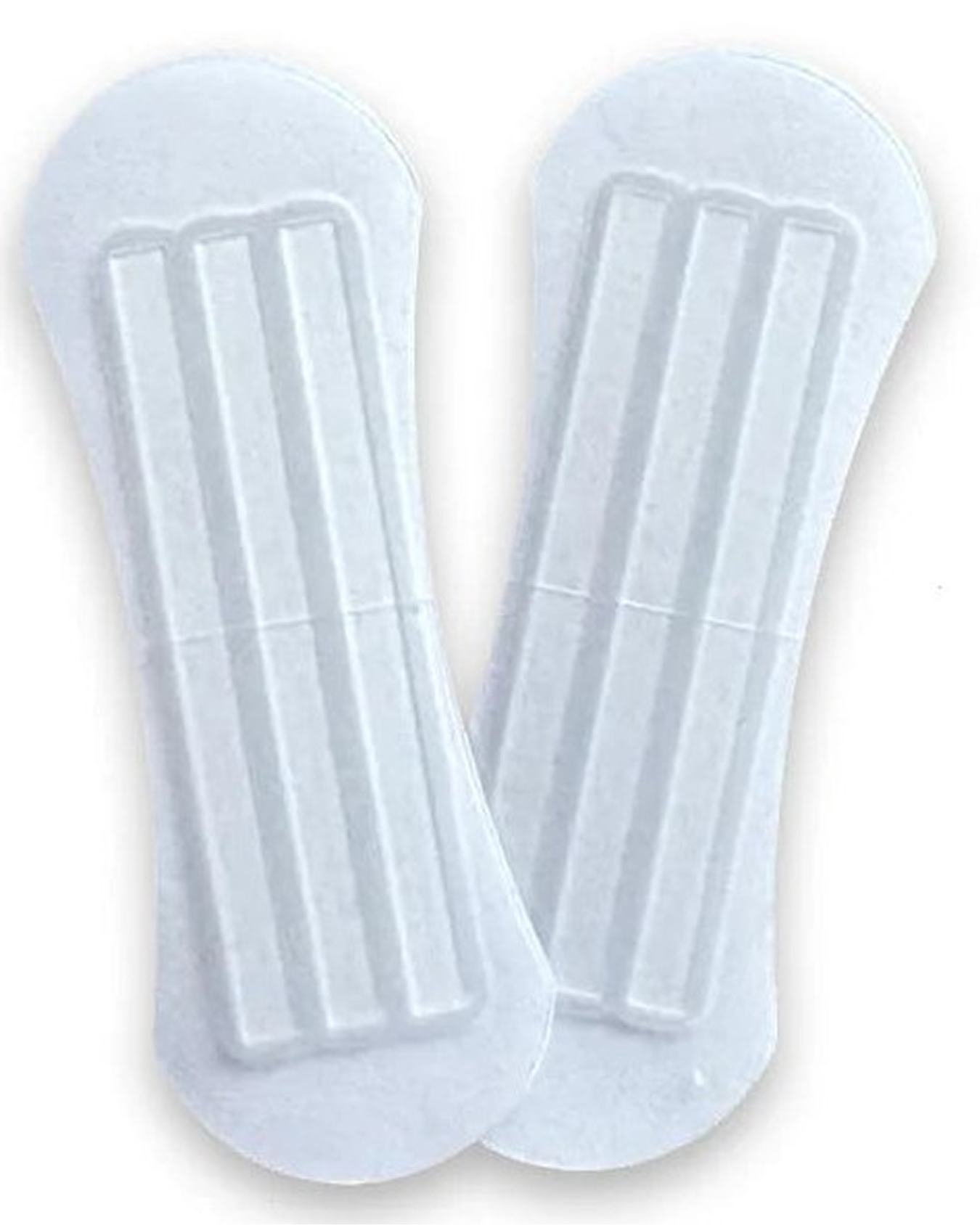
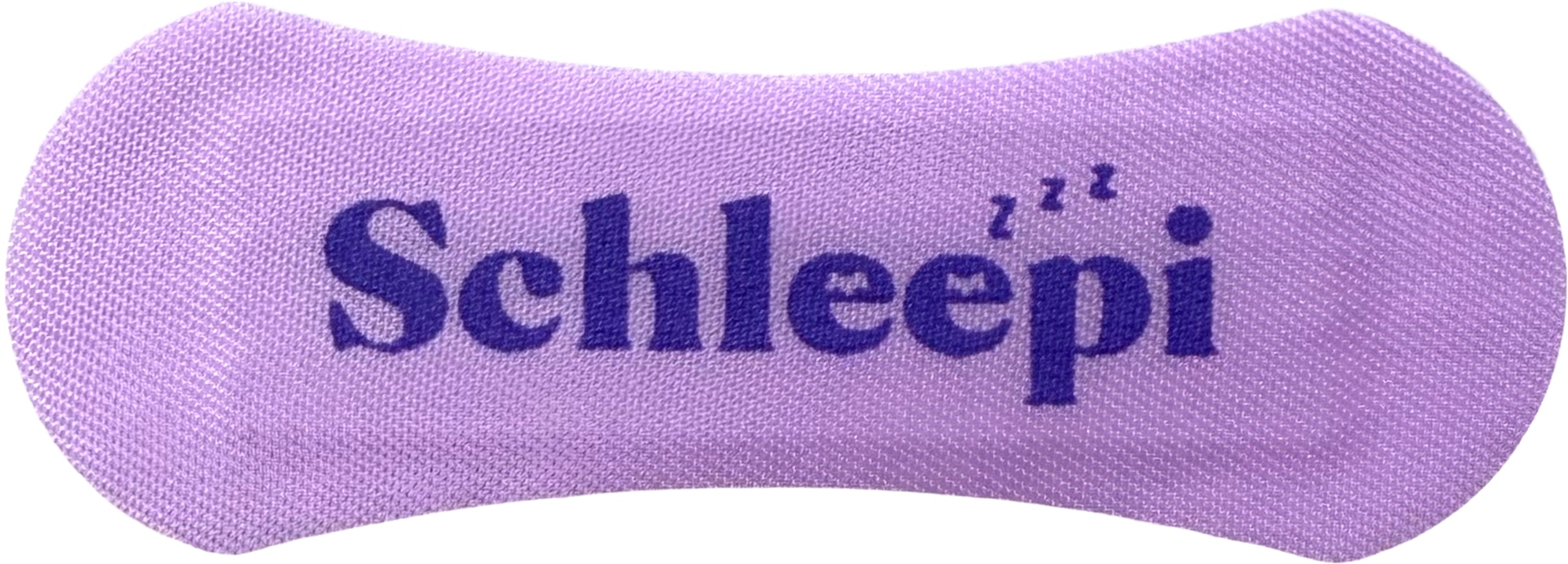
Nasal strips for sleeping work externally. You apply SchleepStrips™ across the bridge of your nose before bed, and the strip's flexible material gently lifts the sides of your nostrils outward, widening the nasal passage and reducing airflow resistance.
That physical lift is what separates sleeping strips from every supplement on your shelf. There's no chemical pathway, no waiting for something to metabolise, no grogginess the next morning from a sedative residue.